
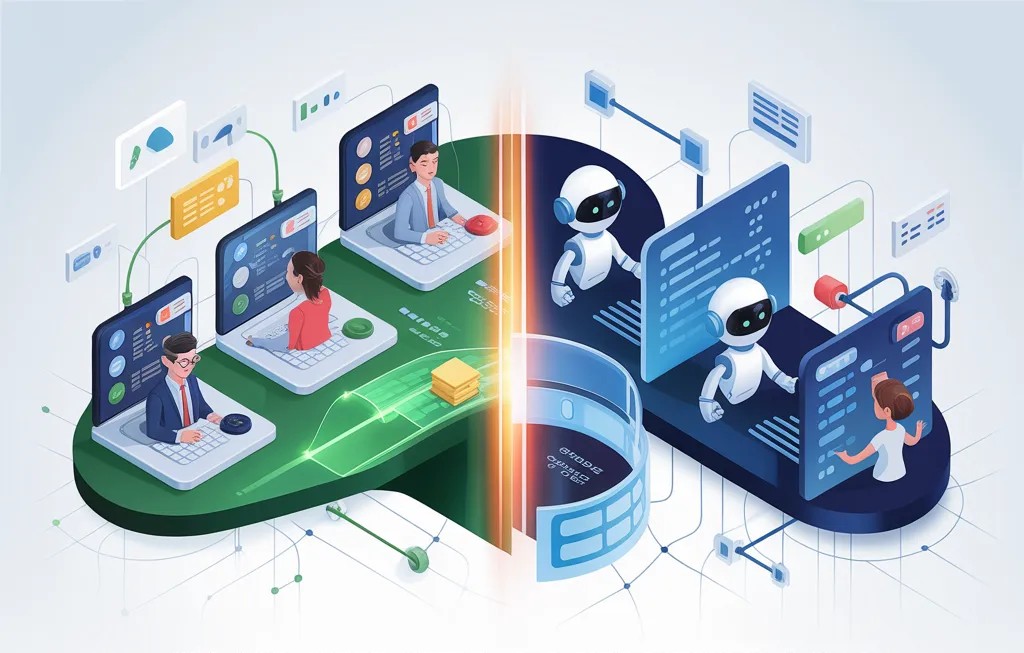
Customer expectations have changed dramatically over the last few years. People now expect fast responses, personalized interactions, and consistent service across every channel. Whether they are contacting a support team, placing an order, or requesting information, customers want smooth and efficient experiences without delays or unnecessary steps.
To meet these expectations, companies are increasingly turning to Artificial Intelligence (AI) and automation technologies. These solutions are helping organizations improve response times, reduce manual work, and provide more reliable customer interactions while allowing employees to focus on tasks that require human judgment and communication.
AI and automation are no longer limited to large enterprises. Organizations of all sizes are adopting these technologies to improve customer satisfaction and create more efficient operations.
How AI and Automation Improve Customer Experience
AI and automation can support customer experience in several practical ways:
Faster Customer Support
One of the most visible improvements comes from automated customer support systems. AI-powered chat assistants can answer common questions instantly, helping customers receive information without waiting in long queues.
Tasks such as:
- Order tracking
- Appointment scheduling
- Frequently asked questions
- Billing inquiries
can often be handled automatically, reducing delays and improving service availability around the clock.
Personalized Customer Interactions
AI systems can analyze customer preferences, previous purchases, and interaction history to provide more personalized recommendations and communication.
For example:
- Retail companies can recommend products based on previous purchases
- Streaming platforms can suggest relevant content
- Service providers can offer customized support options
This creates a more relevant experience for customers and helps organizations build stronger relationships.
Improved Consistency
Manual processes can sometimes lead to inconsistent customer experiences. Automation helps standardize workflows, ensuring that customers receive the same level of service regardless of when or how they interact with a company.
Automated workflows can:
- Route requests to the correct department
- Ensure follow-up actions are completed
- Send timely updates and notifications
- Maintain accurate customer records
This consistency improves trust and reduces frustration.
Reduced Response Times
Customers often judge service quality based on speed. AI and automation help businesses reduce response times by removing repetitive manual tasks from everyday operations.
For example, automated systems can:
- Process customer requests instantly
- Update records automatically
- Trigger notifications in real time
- Escalate urgent cases without delays
As a result, employees can spend more time resolving complex customer issues instead of handling repetitive administrative work.
Better Use of Employee Skills
Automation does not replace the value of human interaction. Instead, it allows employees to focus on conversations and decisions that require empathy, creativity, and critical thinking.
When repetitive tasks are automated:
- Customer service teams can focus on difficult cases
- Sales teams can spend more time building relationships
- Employees experience less repetitive workload
- Organizations can improve overall productivity
This balance between technology and human expertise often leads to better customer outcomes.
Practical Examples Across Industries
Many industries are already seeing measurable improvements through AI and automation:
- Healthcare providers automate appointment reminders and patient communication
- Banks use AI to detect unusual transactions and assist customers faster
- Retail companies automate inventory updates and customer notifications
- Insurance providers speed up claims processing through automated workflows
- Telecommunications companies improve support ticket handling and service activation
These improvements help organizations operate more efficiently while providing better experiences to customers.
Challenges to Consider
While the benefits are significant, successful implementation requires careful planning.
Organizations should focus on:
- Selecting the right processes for automation
- Maintaining data privacy and security
- Ensuring systems integrate properly
- Training employees effectively
- Keeping human oversight where necessary
AI and automation work best when they support employees rather than creating unnecessary complexity.
Conclusion
Customer experience has become one of the most important factors influencing business success. AI and automation provide organizations with practical tools to improve service quality, reduce delays, and create more efficient customer interactions.
Companies that successfully combine technology with human expertise are better positioned to meet growing customer expectations while improving operational performance. The goal is not simply faster service, but more reliable, personalized, and consistent experiences that strengthen long-term customer relationships.
Moving Forward
In the next article, we will explore how business automation continues to evolve beyond traditional automation. The discussion will focus on “What’s Next? The Evolution from Robotic Process Automation (RPA) to Generative AI in Business Processes” and how organizations are beginning to combine automation with AI-generated insights and decision support to improve business operations even further.