
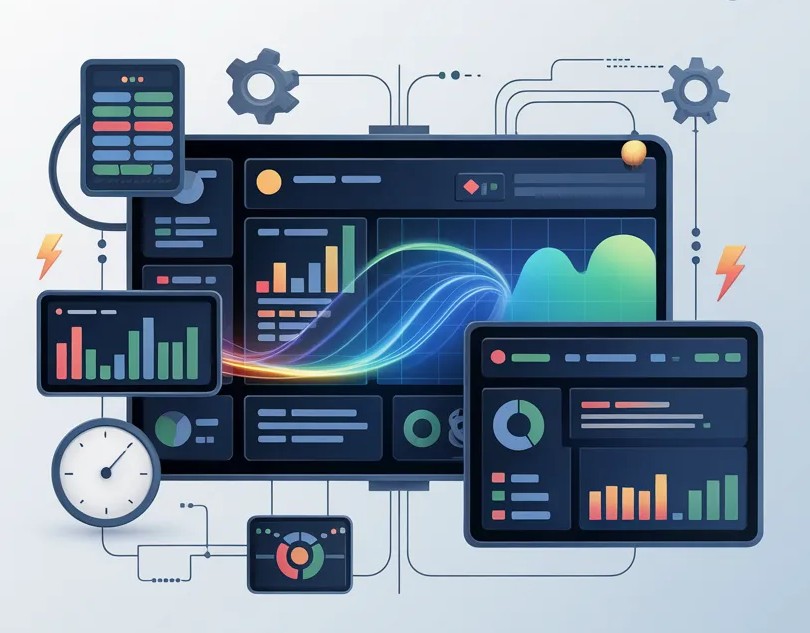
Many organizations still base their decisions on yesterday’s data. Reports are generated, reviewed, and acted upon long after events have already moved on. This delay can lead to missed opportunities and slow responses to critical situations. Real-time analytics combined with automation changes this dynamic by enabling businesses to act immediately, with confidence and accuracy.
At its core, real-time analytics processes data as it is created, while automation ensures that the right actions follow without delay. Together, they form a powerful approach that supports faster, more informed decision-making across all levels of an organization.
Why Real-Time Matters More Than Ever
Speed is no longer a luxury; it is a requirement. Customers expect quick responses, markets shift rapidly, and operational issues need immediate attention. Relying on manual processes or delayed reporting can create gaps that affect performance.
Automation tools, including Robotic Process Automation (RPA), already improve efficiency by handling repetitive tasks and reducing errors. When combined with real-time data, these tools go a step further by not only executing tasks but also reacting instantly to changing conditions.
How Real-Time Analytics and Automation Work Together
The combination of these two capabilities creates a continuous loop:
- Data is captured instantly from systems, applications, or user interactions
- Analytics engines process and interpret this data in real time
- Automated workflows trigger actions based on predefined rules
- Results are monitored and fed back into the system for ongoing improvement
This cycle ensures that businesses are not just observing what is happening, but they are responding to it immediately.
Key Benefits for Organizations
Organizations that adopt this approach often see clear improvements:
- Faster Decision-Making: Leaders no longer need to wait for reports. Insights are available instantly, allowing quick and informed actions.
- Improved Operational Efficiency: Automated responses reduce manual intervention, saving time and minimizing delays.
- Higher Accuracy: Automation reduces human error, while real-time data ensures decisions are based on current information.
- Better Customer Experience: Immediate responses to customer needs lead to faster service and higher satisfaction.
- Proactive Problem Solving: Issues can be identified and addressed before they escalate, rather than reacting after the fact.
Practical Use Cases
Real-time analytics and automation can be applied across various functions:
- Customer Support: Automatically route and respond to customer inquiries based on real-time sentiment or urgency.
- Finance Operations: Detect unusual transactions instantly and trigger compliance checks or alerts.
- Supply Chain Management: Adjust inventory levels or delivery schedules based on live demand data.
- IT Operations: Monitor system performance and automatically resolve common issues before users are affected.
These examples highlight how combining immediate insights with automated actions can streamline processes and improve outcomes.
What to Consider Before Implementation
While the benefits are clear, a thoughtful approach is important:
- Start with processes that are time-sensitive and data-driven
- Ensure systems can integrate smoothly to support continuous data flow
- Define clear rules for automation to avoid unnecessary actions
- Monitor performance and refine workflows over time
It’s also important to remember that not every decision should be automated. A balanced approach, where automation supports human judgment often delivers the best results.
Conclusion
Real-time analytics and automation are not just about speed; they are about making better decisions when it matters most. By combining immediate insights with automated execution, organizations can respond faster, operate more efficiently, and stay ahead in a competitive environment.
As businesses continue to invest in digital transformation, this combination will play a central role in shaping how decisions are made and how quickly value is delivered.
Moving Forward
In the next article, we will explore Cybersecurity in the Age of AI and Automation: Risks and Safeguards, focusing on how organizations can protect their systems while embracing automation and intelligent technologies.